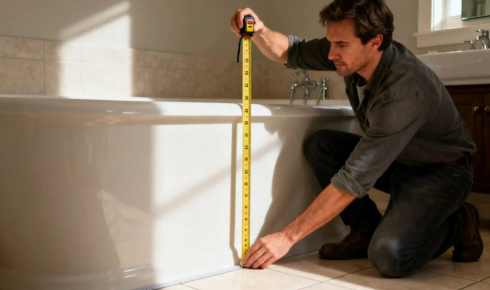
Bathroom failures rarely start with tile, grout, or plumbing—they start with moisture levels no one measured early enough. In Huntsville’s humid climate, a bathroom remodel isn’t considered stable until every substrate, assembly, and enclosure passes moisture standards that are stricter than most homeowners expect. These thresholds decide whether a bathroom lasts 20 years or collapses into callbacks, mold complaints, and rebuilds.
Acceptable Vapor Limits for Tile Floors and Wet Walls
Tile floors and shower walls must meet a maximum vapor emission rate before adhesives or thinset can be applied. Industry standards typically call for moisture vapor emissions under 3 lbs per 1,000 sq. ft. per 24 hours for most tile assemblies, though polymer-modified mortars may tolerate slightly higher. Exceeding these limits leads to bond failure, tile tenting, or hollow-sounding sections that loosen months later. Huntsville general contractors routinely test using calcium chloride or digital probes rather than relying on surface dryness, which often lies.
The layers below the tile matter more than the tile itself. Cement board, waterproof membranes, and joint seams must also fall within acceptable vapor ranges before tile work begins. Even a perfectly installed tile job will detach if moisture pushes upward behind it. This is why remodeling contractors in Huntsville AL often test multiple points across a floor rather than a single reading.
Ideal Humidity Range Before Backsplash Installation Begins
Interior humidity should stay between 35% and 55% before backsplash materials are set. Higher levels slow adhesive cure time and can trap moisture behind splash zones near sinks, allowing swelling behind drywall or cement board. Lower humidity, while less harmful, can pull moisture too quickly from setting compounds, weakening bond strength.
Timing also plays a role during seasonal swings. Huntsville’s summer humidity regularly climbs high enough to delay backsplash scheduling until HVAC and ventilation stabilize air moisture. Remodeling near me projects increasingly track ambient humidity with digital meters instead of assuming indoor air is safe once the bathroom “feels dry.”
Subfloor Moisture Limits That Prevent Future Buckling
Wood subfloors require a moisture content below 12% before bathroom flooring installs, with less than a 2% variance between the subfloor and finished floor material. Anything higher invites cupping, buckling, joint expansion, and long-term movement under tile or floating floors. Moisture imbalances are one of the top failure points seen in home repair in Huntsville AL bathroom rebuilds.
The challenge is that subfloors often dry unevenly. Corners near plumbing penetrations, tub traps, or toilet flanges hold moisture longer than open field areas. General contractors near me check those high-risk zones separately because a single high reading can indicate trapped water that will migrate upward after installation.
Readings Required Before Sealing a Freshly Poured Shower Base
A newly poured shower base, whether mud bed or self-leveling compound, must reach internal curing moisture levels before sealing membranes are applied. Trapped moisture below a waterproof barrier can lead to efflorescence, odor, or mold inside the mortar bed. Acceptable moisture levels vary, but readings must show a steady decline pattern—not just a surface-dry crust. The curing process depends on thickness, temperature, and air movement. Thicker beds require longer dry-down periods, sometimes multiple days beyond visual dryness. Home repair near me crews confirm stability using pinless and penetrating meters to avoid sealing in moisture that later has no escape path.
Wallboard Saturation Levels That Trigger Material Replacement
Gypsum drywall begins losing structural integrity once moisture content exceeds 1%–2% over ambient baseline, and mold colonization risk increases rapidly beyond 16%–18%. Anything at or above those saturation levels is removed, not dried and saved. Even moisture-resistant drywall is not designed to recover from prolonged saturation in wet zones.
Cement backing boards tolerate higher moisture but are still checked for trapped vapor behind them. Replacement decisions consider duration of exposure, discoloration, swelling, and fastener holding strength. Remodeling contractors replace compromised wall assemblies rather than risk hidden swelling that may show weeks after finishes install.
Ventilation Benchmarks Needed Before Finishing Paint Is Applied
Bathrooms must reach proper air exchange rates before paint coatings are applied, typically verified by CFM performance of exhaust fans and measured humidity stability during a 20–30 minute closed-room test. High humidity during paint curing creates adhesion problems, streaking, extended outgassing, and a softened finish that scuffs easily.
A stable bathroom should return to baseline humidity levels within 15–20 minutes after a hot shower simulation. This benchmark confirms that ventilation performance matches the moisture load of the space. Huntsville general contractors often increase duct diameter, shorten vent runs, or replace fans that move less air than advertised.
Safe Moisture Margin for Mounting Vanities and Trim
Wood vanities, MDF trim, and bathroom millwork should not be installed when surrounding materials exceed 10%–12% moisture content. Wood absorbs moisture fast and shrinks slowly, which leads to warping cabinet boxes, splitting joints, or cracked caulk lines where trim meets walls.
The goal is equilibrium, where installed materials and surrounding substrates fall within 2%–4% of each other in moisture content. This prevents post-install movement. General contractors in Huntsville AL often stage cabinetry in the home before install to acclimate materials and prevent expansion surprises.
Thresholds That Determine When Air Movers Are Still Required
Air movers remain in place until moisture readings plateau across repeated 24-hour checks. Drying is considered complete when moisture reduction stops—not when it first enters an acceptable range. Premature removal of air movement is one of the most common reasons bathrooms show elevated moisture again after work resumes.
Residual humidity pockets linger behind tubs, in insulation bays, and inside plumbing wall cavities. Fans and dehumidifiers must run long enough to equalize those zones as well. Remodeling in Huntsville AL often includes extended drying cycles due to the region’s outdoor humidity slowing evaporation rates indoors.
Bathroom moisture thresholds determine the difference between a remodel that performs and one that eventually fails beneath the surface. Hoover General Contractors provides moisture-verified repair and remodel services designed to exceed critical thresholds before materials are installed.