Water has a way of becoming part of the background. We turn on the kitchen tap, fill a glass, start the washing machine, and get on with the day. It is only when something seems wrong that we begin paying attention. Maybe the showerhead keeps collecting white deposits, soap never seems to rinse away properly, or drinking water develops an unusual taste. These small frustrations can raise a bigger question: is the water entering your home really suited to your household’s needs?
The answer depends on where your water comes from, what it contains, and how you use it. There is no single treatment system that solves every problem, and choosing equipment before understanding the water itself can lead to unnecessary spending.
Start by Understanding Your Water Supply
Most homes receive water from one of two sources: a public utility or a private well. Each comes with its own considerations, and the difference matters when deciding what kind of treatment may be useful.
Municipal water is generally treated and monitored by a local water provider before it reaches homes. That treatment helps control many common contaminants and makes the supply suitable for its intended use. However, water quality can still vary depending on the source, distribution network, and plumbing inside a property. Older pipes or household fixtures may introduce issues that weren’t present when the water left the treatment facility.
A public water report is a useful place to begin. It can tell you about the source, treatment processes, and substances measured by the utility. If the water has a persistent taste, odor, or appearance problem, further testing at the home may help identify the cause.
Private supplies need a slightly different approach. A household relying on a well is responsible for arranging appropriate testing and maintaining its own water system. Even when the water has looked and tasted fine for years, conditions underground can change.
Why Well Water May Need More Attention
Well water comes directly from an underground source, so its quality depends on local geology, nearby land use, and the condition of the well itself. Some wells contain high levels of hardness minerals, while others may have elevated iron, manganese, or naturally occurring substances that require specific attention.
A metallic taste or reddish staining around sinks can sometimes suggest iron, although appearances alone cannot confirm the cause. Cloudiness, unusual odors, or sudden changes in taste also deserve investigation. Some contaminants, including certain bacteria and dissolved chemicals, may not produce obvious signs at all.
Regular testing is therefore important, especially for households with private wells. Testing schedules should reflect local recommendations and the characteristics of the water source. Additional tests may be needed after flooding, well repairs, or changes in nearby land use.
Once you have reliable results, choosing a treatment method becomes much easier. A sediment filter may help with suspended particles, while a disinfection system may be appropriate when microbial contamination is confirmed. Iron removal equipment can address certain staining problems. The key is matching the treatment to the actual issue rather than buying a system based on a general promise.
When a Water Softener Makes Sense
Hard water is one of the most common reasons homeowners explore treatment. It contains dissolved calcium and magnesium, which can leave mineral deposits on taps, shower doors, cookware, and heating equipment. Hardness can also make soap less effective, adding a little extra work to everyday cleaning.
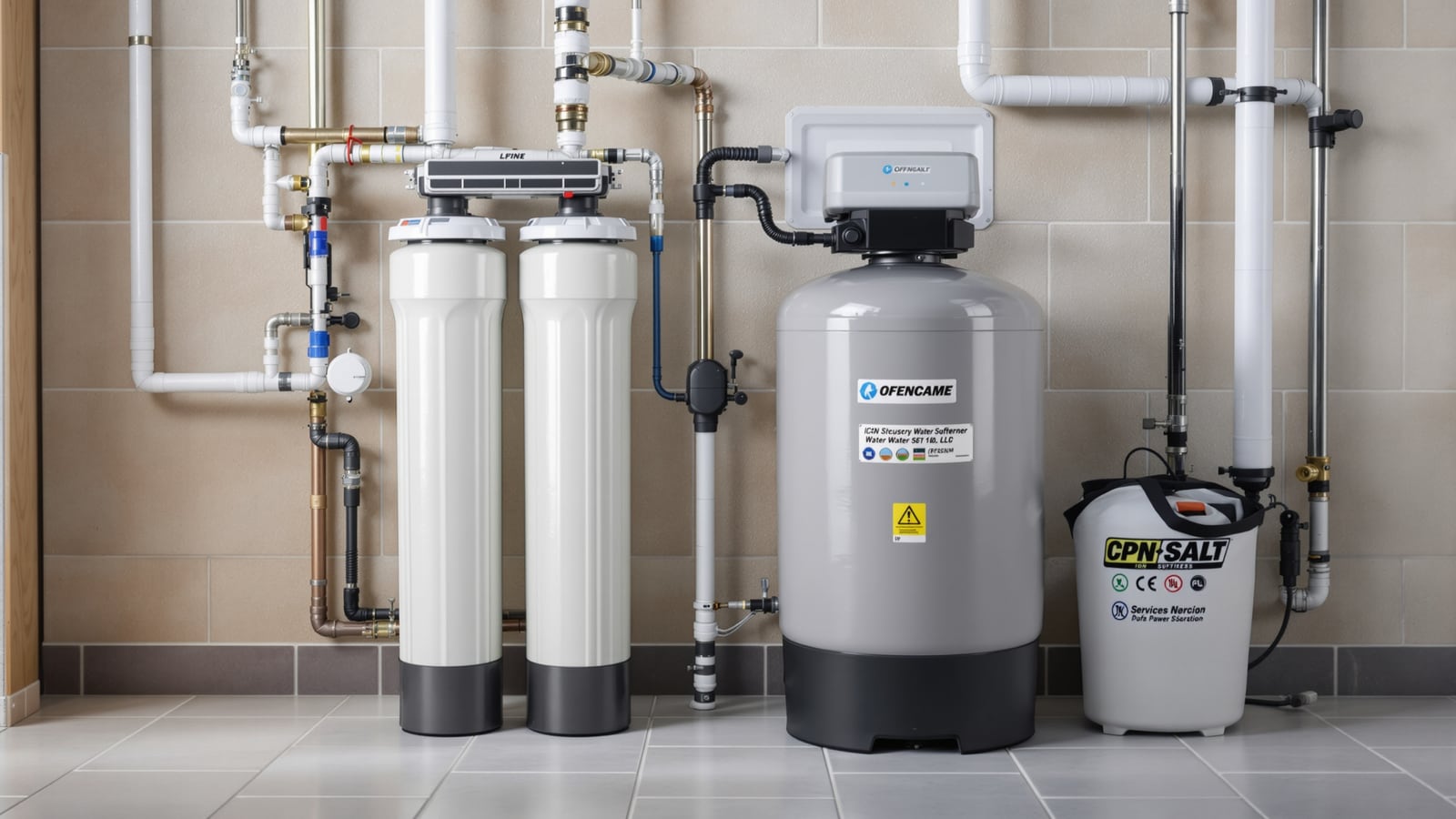
A water softener typically uses an ion-exchange process to reduce calcium and magnesium. In many systems, the minerals are exchanged for sodium or potassium ions, and the equipment periodically regenerates to restore its capacity. This can help reduce mineral scaling and make washing, bathing, and cleaning more convenient.
Still, softening isn’t necessary for every home. The right choice depends on measured hardness, household water use, and personal priorities. Some people mainly want to reduce deposits on fixtures, while others are concerned about the effects of hard water on appliances and plumbing.
It’s also important to understand what a softener does not do. It isn’t a universal purifier and should not be expected to remove every contaminant. If your water has bacterial contamination, excessive nitrate, or another specific concern, a different treatment method may be required.
Homeowners who are watching sodium intake should discuss softened water with a healthcare professional if they have been advised to restrict sodium. Depending on the system and water hardness, an unsoftened drinking-water tap may be a practical option.
Not Every Water Problem Requires the Same Filter
Water treatment products can look remarkably similar when you’re comparing them online. Their actual functions, however, can be quite different. A little research now may save you from installing equipment that never addresses the problem.
Sediment filters are designed to capture particles such as sand, rust, and other suspended material. Activated carbon filters can reduce certain substances that affect taste and odor, including chlorine in many applications. Reverse osmosis systems can reduce a range of dissolved substances, depending on the membrane, system design, and contaminant involved.
Some homes benefit from more than one treatment stage. For example, a household might use a sediment filter to protect downstream equipment and a separate system for drinking water. Another home may need only a softener because testing shows that hardness is the main concern.
Check product certifications and performance claims carefully. Look for documentation showing which contaminants a system is tested to reduce, rather than relying on broad phrases such as “cleaner water” or “advanced filtration.” If a claim sounds impressive but doesn’t identify what the equipment removes, ask for clarification.
Consider Installation, Maintenance, and Running Costs
The purchase price is only one part of owning a water treatment system. Depending on the equipment, you may also need replacement cartridges, salt or other regeneration materials, electricity, periodic servicing, and occasional repairs.
Before choosing a system, find out how often its components need attention and whether replacement parts are readily available. Ask about installation requirements, water pressure, drainage, and the space needed for the equipment. These practical details matter, particularly in smaller homes where storage space is limited.
Routine care is worth taking seriously. A neglected filter can lose effectiveness, while incorrect settings may prevent a softener from working as intended. Follow the manufacturer’s maintenance schedule and keep a simple record of filter changes, servicing, and test results.
Professional installation can be helpful when the system involves changes to household plumbing or requires careful adjustment. A qualified installer should be able to explain what the equipment does, what it doesn’t do, and how to recognize a problem later.
Make the Decision with Confidence
Improving household water quality doesn’t have to become an expensive project. Start with the water source, identify any concerns, and arrange suitable testing. Then compare treatment options according to their verified capabilities, operating costs, and maintenance needs.
For public supplies, review the local water quality report and investigate any concerns specific to your home. For private wells, make regular testing part of household care. If hardness is the main issue, softening may offer practical benefits. If testing identifies another contaminant, choose a system designed for that specific purpose.
Most importantly, don’t assume that clearer water is automatically safer or that every home needs multiple filters. Good decisions come from evidence, not guesswork.
Water is something we rely on every day, so it deserves a little attention. With reliable test results and the right equipment, you can improve comfort, protect water-using appliances, and make a more informed investment in your home. Sometimes, the best solution isn’t the most complicated one. It’s simply the one that fits your water and your household.
